Factories are built to perform.
We make sure yours does.
If your manufacturing operation isn’t performing to designed capacity, we fix that.
We go into manufacturing facilities, identify what’s limiting performance, and eliminate it.
Reliable On-Time Delivery
Higher Quality
Improved Lead-Times
Trueworx was built on hands-on manufacturing work across complex programs tied to Apple, Google, and capital equipment manufacturers including Xcerra.
One Diagnostic. Four Paths.
Every Engagement Starts With a Manufacturing Diagnostic
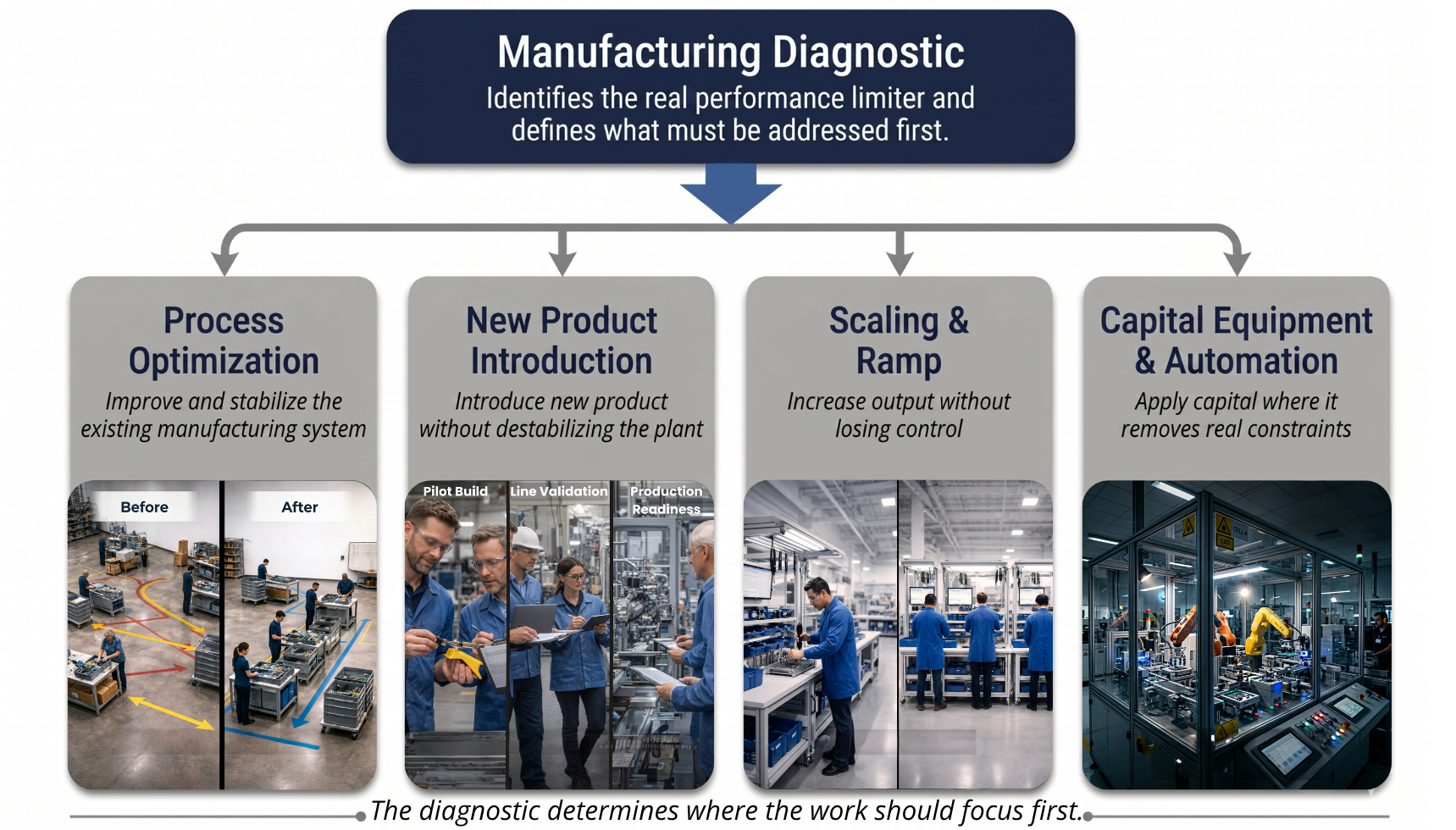
The diagnostic determines what is constraining performance, what should be addressed first, and which path of work makes sense.
That work may happen inside your own facility or through a contract manufacturer. Trueworx can also help you select the right contract manufacturing partner and ensure the operation is set up to run correctly from the start.
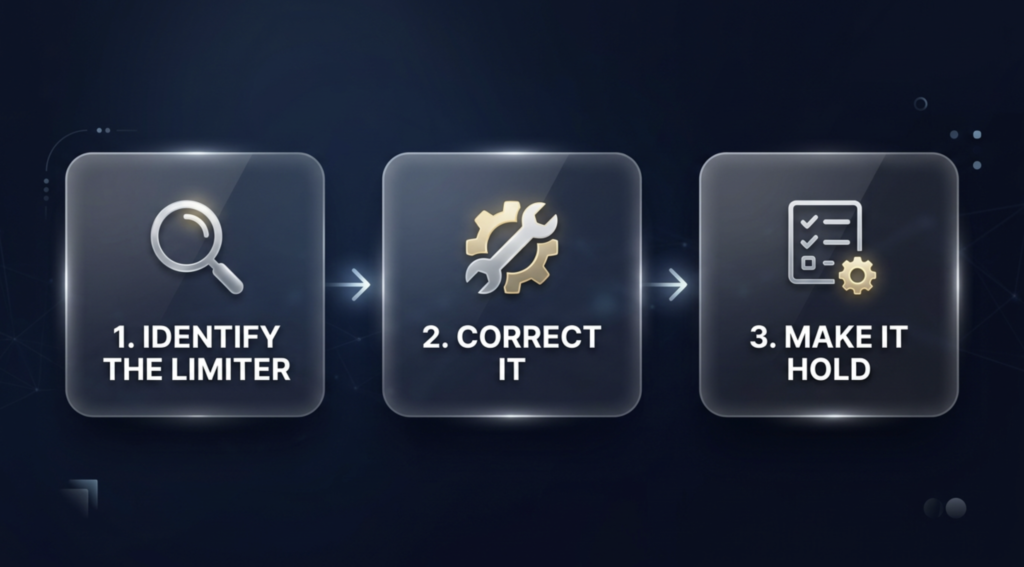
The path may change. The job does not. We identify the limiter, correct it, and make it hold.
We do not Assume.
We observe.
We go to the floor. We start where the order enters the business, and we follow that path all the way through shipment so we can see the full process, where it breaks down, and what needs to be fixed.
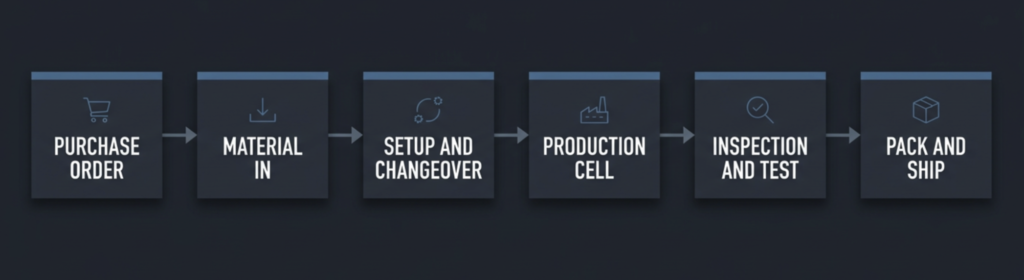
We do not analyze from a conference room. We do not start with generic recommendations. We start by seeing the system as it is running today.
Most outside support stops at recommendations.
Trueworx goes inside the manufacturing operation to identify the problem, correct it, and stay with it until the operation performs the way it should.
Manufacturing Performance Is Not Random
When performance falls short, there is a cause.
Factories do not underperform randomly.
When output is below designed capacity, something inside the system is limiting it.
If you have output instability, recurring quality issues, schedule misses, excess labor, downtime, or rework, those are signals coming from the production system.
Workarounds, expedite fees, and constant firefighting do not solve the issue. They hide it.
The job is to identify what is actually limiting performance and remove it, not manage around it.
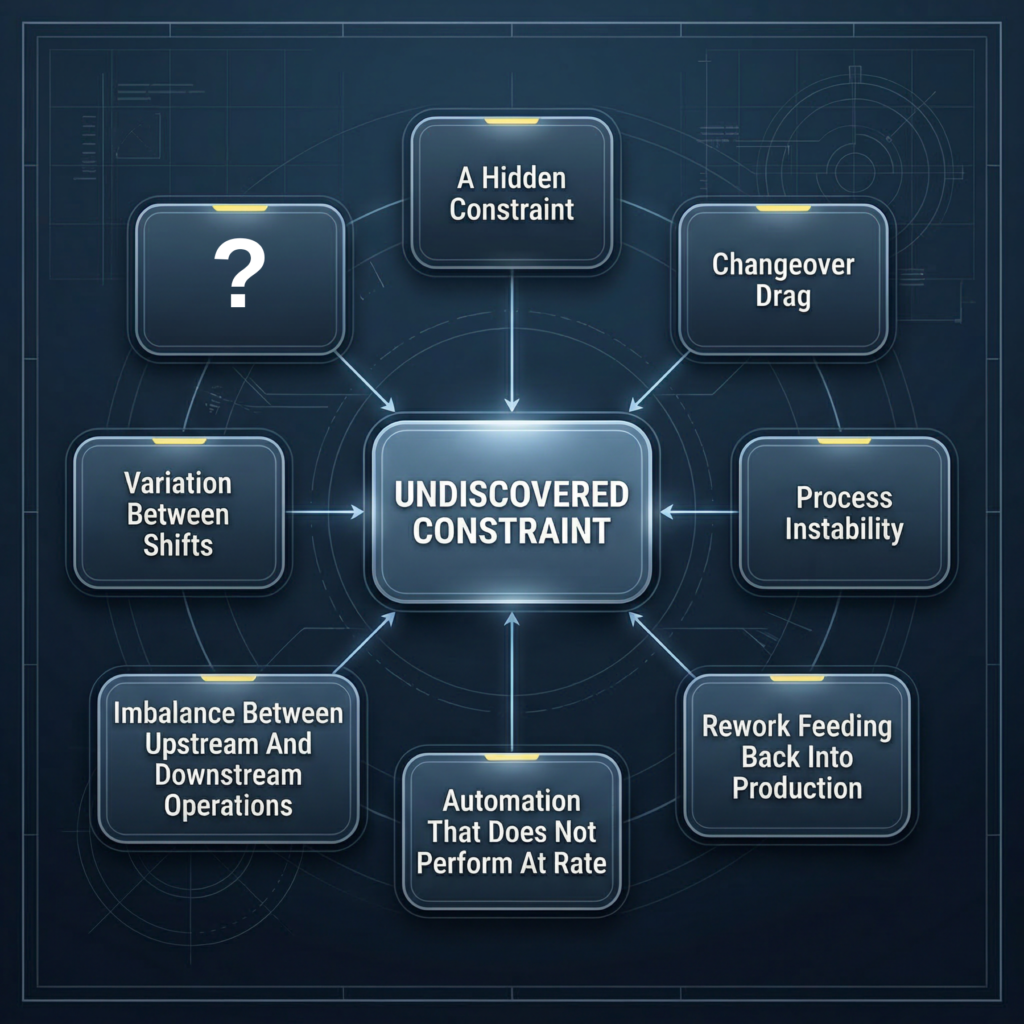
These are common signs that the real limiter has not yet been identified.
What Changes When The Limiter Is Removed
When the true constraint is identified and removed, the improvement does not stay isolated to one line item. It shows up across the operation.
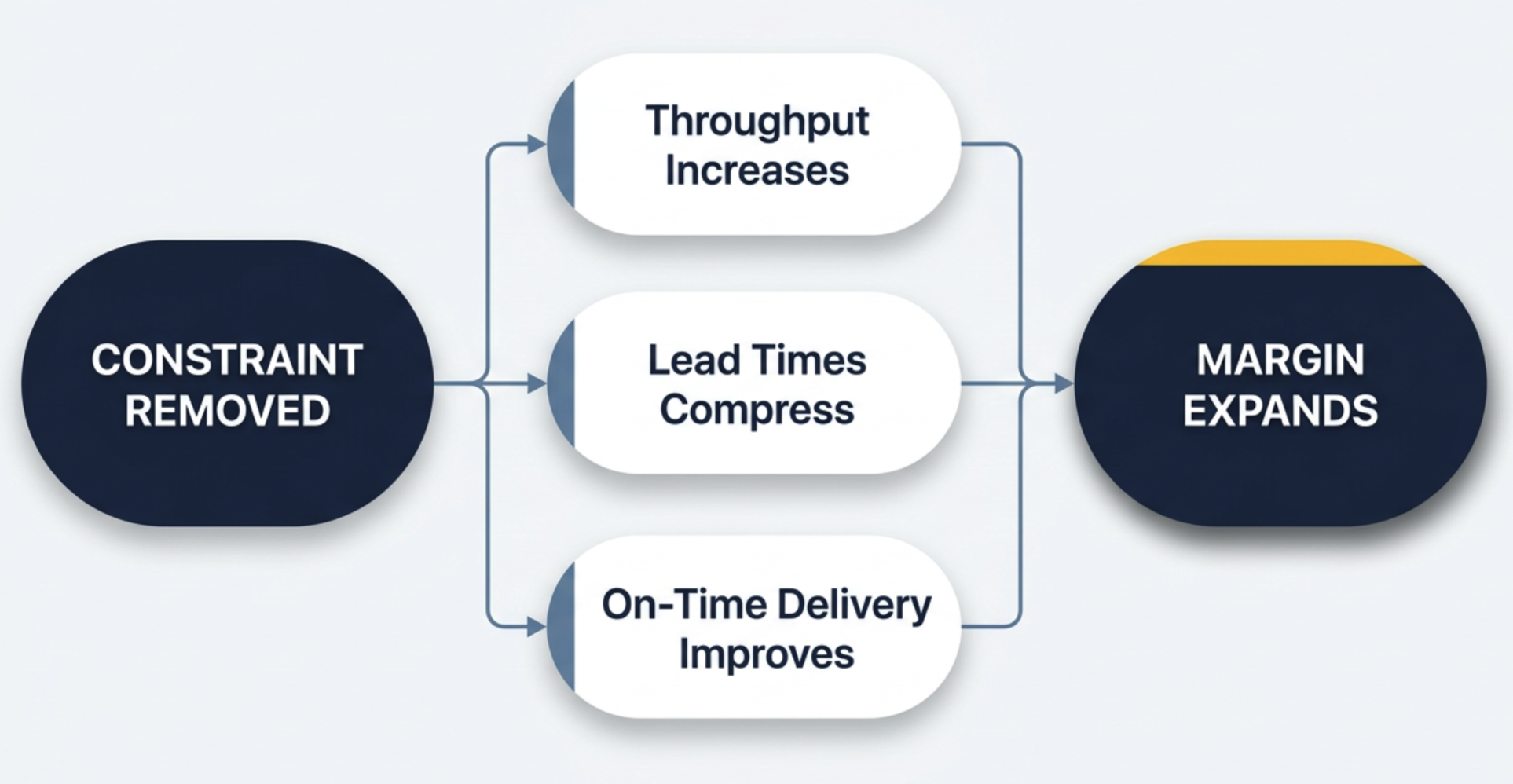
This is not about making the plant busier. It is about making the system perform with more control.
Performance becomes engineered. Not hoped for.
Who This Is For
This is for manufacturers dealing with:
Unstable output
Recurring operational friction
Missed customer expectations
Underused capacity
Launch instability
Equipment that runs, but does not reliably support production
Automation projects being discussed, specified, or struggling after install
Operations being run through a contract manufacturer that need stronger production
Oversight, launch support, or performance improvement
Companies planning to use a contract manufacturer and need help selecting the right one and setting the operation up correctly from the start
If the operation is stable, predictable, and performing the way it should, you probably do not need this.
If it is not, this is where the work starts.
If your operation is not performing to designed capacity, there is a reason...
Start where the problem actually is.
You do not need another meeting about symptoms. You need to know what is limiting performance, where it is happening, and what has to be fixed first.
That is what the Manufacturing Diagnostic is built to do: identify the limiter, correct it, and make it hold.