The Trueworx Approach
Manufacturing Performance Is Not Random
Every engagement starts with a Manufacturing Diagnostic.
When performance falls short, something inside the operation is causing it.
Trueworx starts by identifying what is actually limiting performance, then moves into the work required to correct it and make it hold in production.
That work may happen inside your own facility or through a contract manufacturer. Trueworx supports both.
Once the limiter is identified, the work moves into one or more execution domains depending on what the operation requires.
Identify the limiter. Correct it. Make it hold.
One Diagnostic. Four Paths.
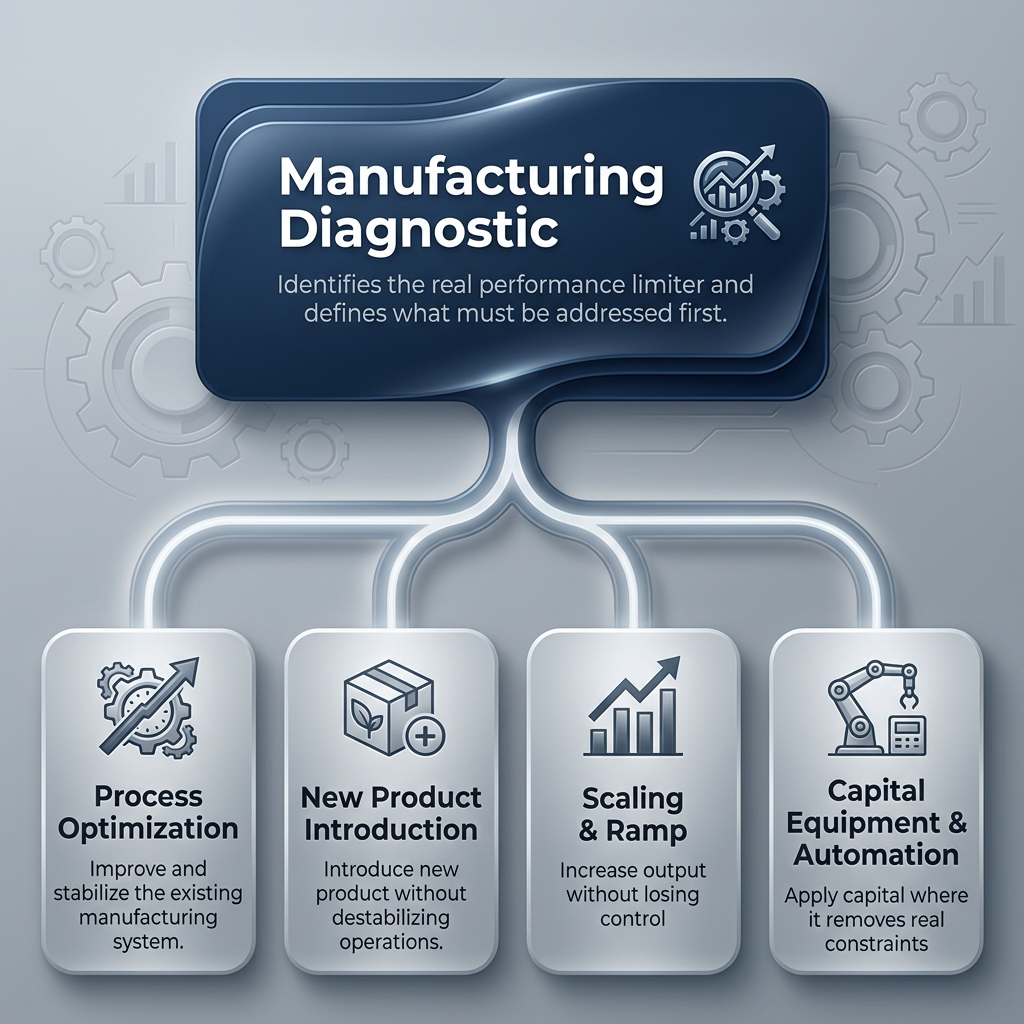
Every Engagement Starts With a Manufacturing Diagnostic
Before process changes, ramp decisions, or capital investment, the first step is identifying the real limiter inside the operation.
The diagnostic determines what is constraining performance, what should be addressed first, and which path of work makes sense.
Once the limiter is identified, the work moves into one or more execution domains depending on what the operation requires.
The path may move through a single domain or across several.
The domain path may change. The objective does not:
Identify the limiter. Correct it. Make it hold.
If there is, we move to correction and stabilization.
PROCESS OPTIMIZATION
Improve and stabilize the existing manufacturing system
Before new product, before higher volume, and before automation, there is the current manufacturing system.
If performance is below potential, the limiter is usually already inside that process.
This work focuses on flow from order to shipment, including:
- Bottlenecks and constraint behavior
- WIP, throughput loss, and flow disruption
- Process variation, yield loss, and rework
- Material movement and handling
- Daily operating conditions that prevent stable performance
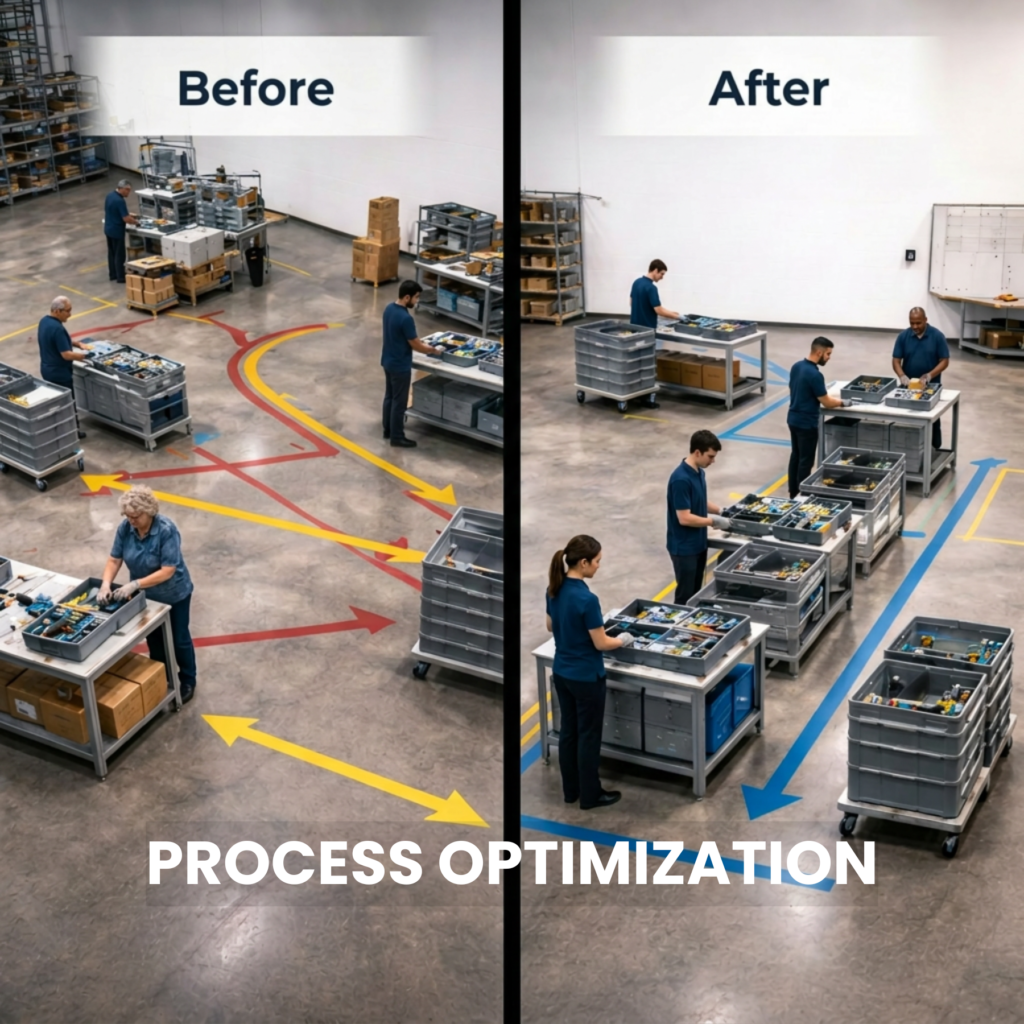
We identify what is limiting performance. We correct it. We make sure it stays corrected.
NEW PRODUCT INTRODUCTION (NPI)
Introduce new product without destabilizing the plant
Introducing new products changes how the plant operates.
This work focuses on correcting readiness gaps before they become production problems, including process definition, build flow, production support, issue closure, and launch control.
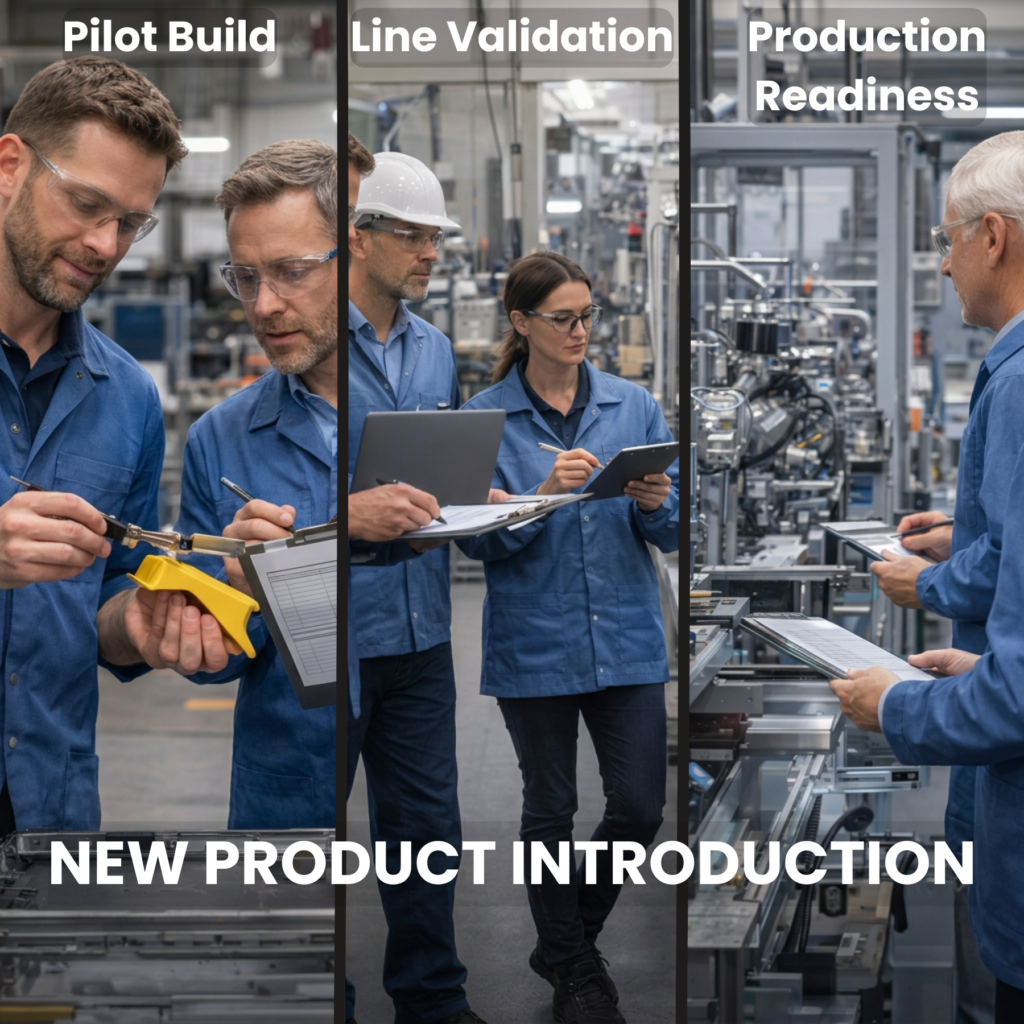
We want to launch in a way the plant can actually support.
The goal is not just to release a product.
The goal is to run it in production while protecting throughput, quality, and delivery.
SCALING & RAMP
Increase output without losing control
Growth changes system load.
What runs at one volume may fail at higher demand levels.
As volume rises, weak points that were manageable at lower demand start to break: constraints tighten, variation grows, capacity gaps become visible, and material flow becomes harder to control.
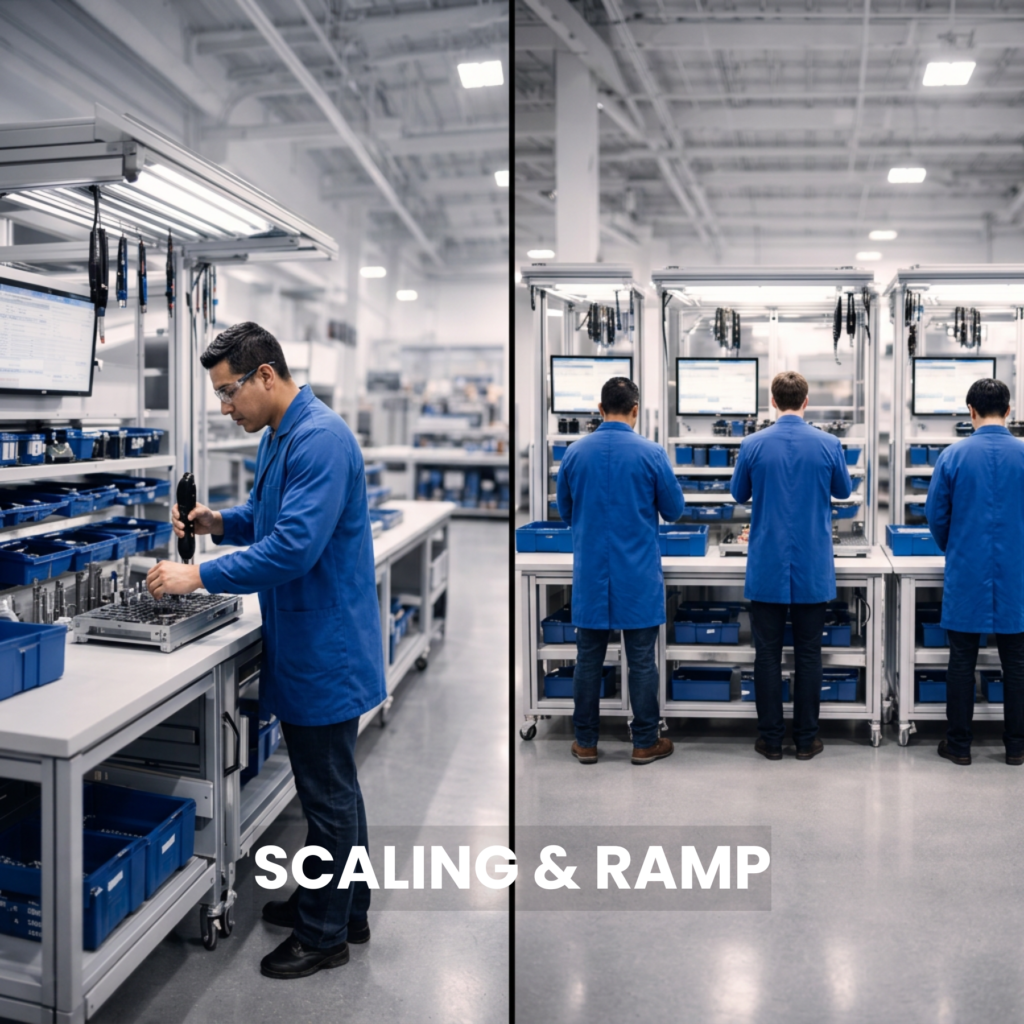
Scaling & Ramp work helps the plant carry more volume while improving throughput, quality, delivery performance, and operating control.
The issue is not just whether demand increases. It is whether the operation can actually support that increase in a controlled and repeatable way.
CAPITAL EQUIPMENT & AUTOMATION
Apply capital intelligently
Automation and capital investment should remove real constraints.
They should not compensate for weak processes.
Before capital is deployed, validate the true limiter, determine whether equipment or automation is the correct solution, define how it will integrate into the existing operation, and quantify the performance improvement it must deliver.
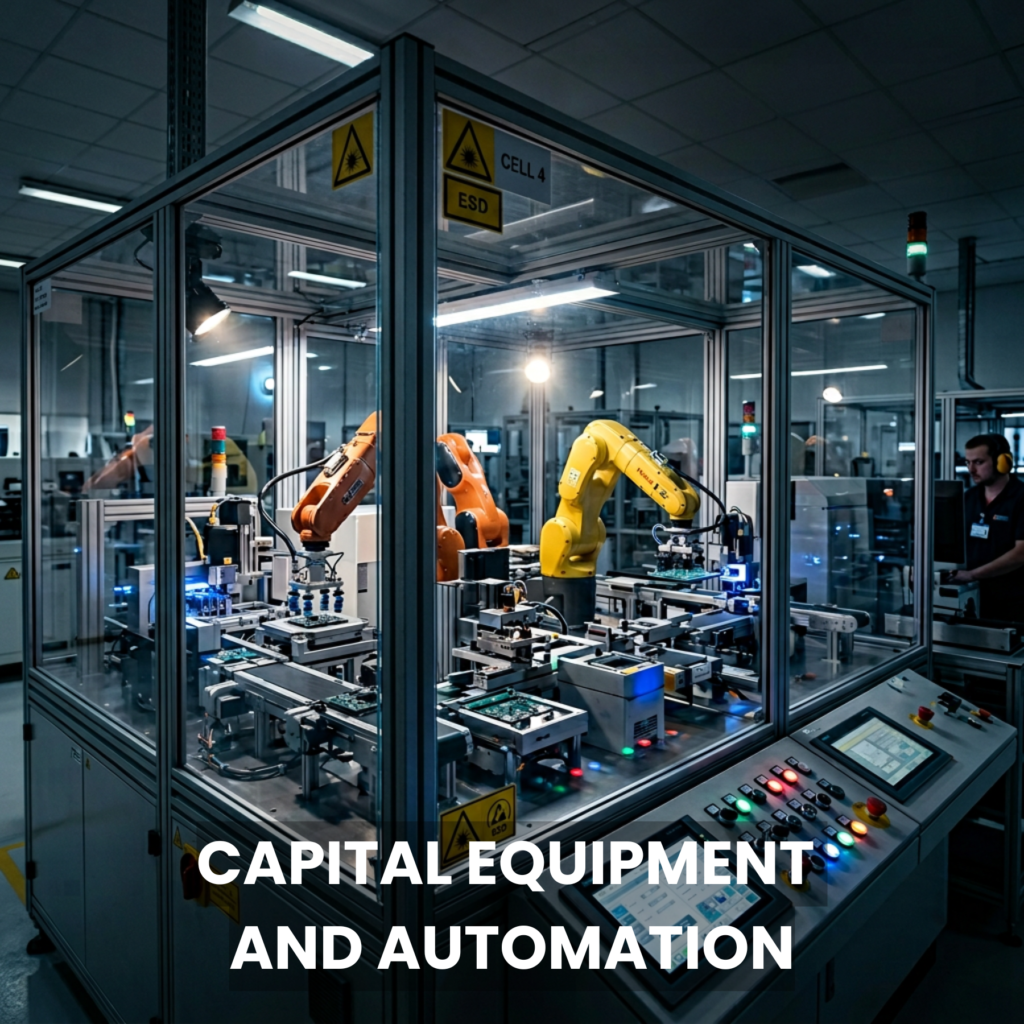
Technology is leverage only when it is aimed at the real constraint.
Applied to a stable process, it increases capability.
Applied to a weak process, it usually creates a more expensive problem.
The work path may change. The job does not.
Identify the limiter. Correct it. Make it hold.
Built From Real Manufacturing Execution
The Trueworx approach was built through years of hands-on work inside Tier 1 contract manufacturing and capital equipment organizations, running complex programs for Fortune 100 consumer electronics brands and leading semiconductor equipment manufacturers. That work included automation bring-up, pilot production, production ramp, line-performance improvement, and complex equipment builds.
It is not built on theory, workshops, or slide decks. It is built on what it takes to make manufacturing perform on the floor.
Ready to identify what is limiting performance?